
The right to weakness
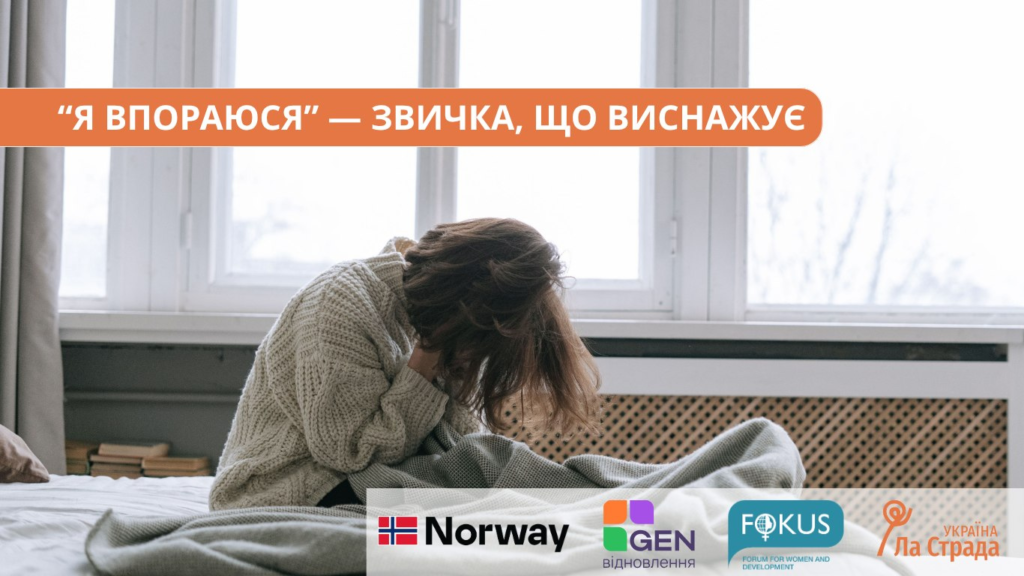
Have you ever been haunted by the thought that you have no right to stop? That you need to hold on, even when you have no more strength. To smile, even when you feel like crying. To help others, even when you yourself need support.
Many people live with the belief that being strong is a duty. However, such beliefs can be debilitating and force us to hide.
You may not say, “I don’t allow myself to be weak,” but it manifests itself in habitual patterns of behavior that seem normal: not talking about difficulties, postponing rest “for later,” even when it’s very difficult, continuing to pretend that everything is fine.
Family upbringing
Many people grew up with the phrases:
- “Don’t cry.”
- “Be patient.”
- “You are strong.”
Even if adults wanted to support, the child learned a simple rule: the strong are loved more than those who are struggling.
Over time, this attitude carries over into adulthood.
Social expectations
Society often romanticizes the image of a person who can do everything.
Builds a career, takes care of a family, supports others, takes care of herself, never complains, and always finds the strength to move on.
However, behind this picture there is almost no room for ordinary human fatigue.
This leads to the thought:
“If I can’t cope, then there’s something wrong with me.”
Social expectations for women reinforce prejudices: to be “comfortable,” “calm,” “enduring,” not too emotional, and not too demanding. In such a reality, silence becomes a way to avoid judgment, because speaking out means being devalued.
At work
The work environment often rewards productivity, responsibility, and perseverance, which is why many feel that any sign of fatigue or insecurity could call into question their professionalism.
As a result, you start working at the limit of your capabilities, not allowing yourself to take a break.
This can manifest itself as:
- you agree to additional tasks, although you are already overloaded;
- do not take sick leave, even when you feel unwell;
- you hide your fatigue so as not to seem “not strong enough”;
- constantly prove your own competence, even if no one asks for it.
From the outside, this may look like a responsibility, but inside, exhaustion builds up, which sooner or later makes itself felt.
In personal relationships
In relationships, you tend to be the one who supports others, but you don't allow yourself to be supported:
- say “everything is fine” when it is not;
- do not ask for help, even when it is needed;
- are afraid to show tears or confusion;
- They postpone their own needs so as not to create “problems.”
Gradually, your partner, friends, or loved ones may not realize that great fatigue is hidden behind your outward calm.
In everyday life
You feel like you need to control everything. You have to manage to work, take care of the house, help your family, be attentive to your friends, and at the same time find strength for yourself.
If something doesn't work out, a feeling of guilt arises.
It might look like this:
- you don't allow yourself to just do nothing;
- feel guilty about resting;
- You think that asking for help is not worth it because you can handle it on your own.
All of this gradually creates a life in which there is almost no room for yourself.
The ban on weakness does not arise by itself. Most often, it happens due to the attitudes that a person hears throughout his life.
Every person has the right to get tired, doubt, cry, and ask for support.
By giving up the constant need to be "invincible", it becomes possible to live without the exhausting struggle with yourself, to better listen to your own needs, and to build a life in which there is room not only for achievements, but also for taking care of yourself.
If you have been a victim of domestic violence or gender discrimination, please contact the National Hotline for Prevention of Domestic Violence, Human Trafficking and Gender Discrimination for advice and assistance:
📱116 123
☎ 0 800 500 335
Telegram: https://t.me/NHL116123_bot
Instagram: https://www.instagram.com/lastradaukraine?igsh=anhubWR2YzZvZWxj
Facebook: https://www.facebook.com/share/1DDns7NTvT/?mibextid=wwXIfr
This article was made possible by the support of the Norwegian people through the Ministry of Foreign Affairs of Norway (MFA of Norway) within the framework of the project “Building a Gender-Inclusive Recovery with the Women’s Movement of Ukraine” (GEN-Recovery). Responsibility for the content of the information lies with the NGO “La Strada-Ukraine”. The information presented in this article does not necessarily reflect the views of the Ministry of Foreign Affairs of Norway or the Government of Norway.
 Українська