
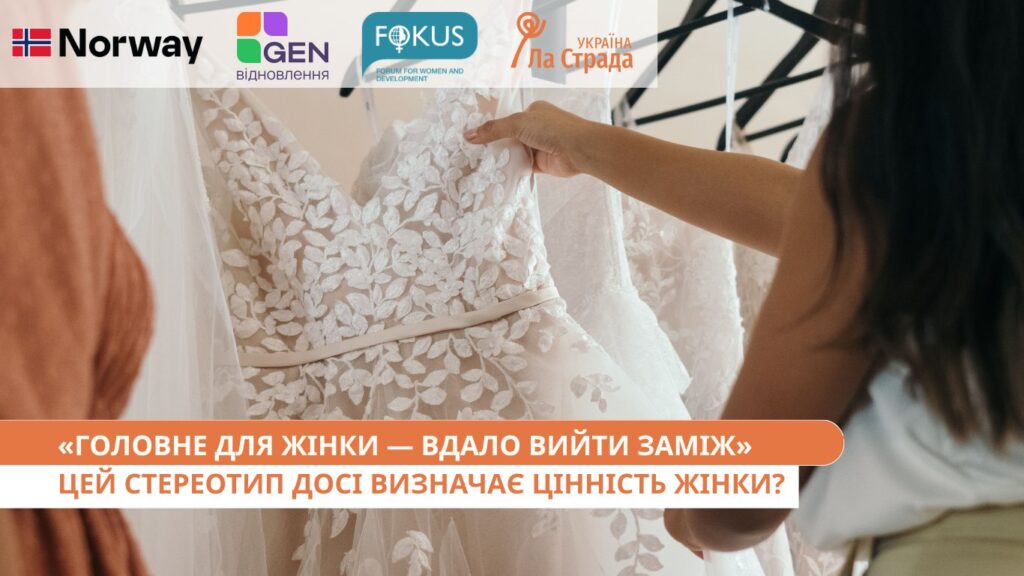
“The main thing for a woman is to get married successfully.” Why does this stereotype still define a woman’s value?
Today, women create businesses, head companies, serve in the military, engage in science and art, and realize themselves in a wide variety of professions. But the stereotype that a woman's main achievement is to successfully marry has not disappeared.
They have only changed form. Now they are presented not as a requirement, but as "concern," "good advice," or "life wisdom," but the essence remains the same: as if without marriage, a woman will not become truly successful and happy.
Where does this stereotype come from?
For centuries, women's opportunities were severely limited. They could not independently manage property, obtain an education, or provide for themselves financially. Marriage was often not a choice but a necessity that guaranteed social status, security, and the possibility of survival.
Although society has changed, many old ideas still remain. That is why even today you can hear: "Be a good housewife so that your husband will marry you."
When marriage became an indicator of "success"
Often a woman's life is judged not by her achievements, but by whether or not there is a man nearby.
Graduated from university? Okay, but when will you get married?
Got a promotion? Well done, but you might end up lonely.
Bought an apartment? That's great, but you need a man's shoulder nearby.
Such comments create the feeling that any personal achievements are secondary if a woman is not married, as if her life constantly needs a "highlight" that will confirm her success.
Why is this stereotype dangerous?
When society convinces you that the main thing is to find a husband, it creates strong psychological pressure.
Some women begin to see their loneliness as a failure. Others settle for relationships that don't make them happy simply because they fear judgment or the status of "single." Others put off their dreams, education, or careers, believing that they need to get their personal lives in order first.
As a result, decisions are made not because the person truly wants to, but because that is what society expects.
What if a woman doesn't want to get married?
For some, marriage is an important life goal. For some, it is not. And both options are normal.
Some women dream of a family, while others want to first realize themselves in their profession. Someone has experienced painful relationships and is not ready to build new ones, while someone simply feels happy without a partner.
None of these scenarios make a person less fulfilled. Each person has their own pace, their own desires, and their own circumstances.
The most important thing is not to get married successfully, but to live your life successfully.
Marriage can be a source of love, support, and happiness, but only when it is a conscious choice and not a way to meet someone else's expectations.
A woman's worth is not determined by the presence of an engagement ring or the surname of her husband. She does not become more successful just because she is married, and she does not become less significant if she does not.
Every person has the right to independently determine what a happy life means to them. For some, it is family, for others, it is a favorite hobby, travel, creativity, and none of these paths is more or less correct than the other.
Because the main thing is not to get married well. The main thing is to live the way you want, so that your life corresponds to your values, not other people's expectations.
If you have been a victim of domestic violence or gender discrimination, please contact the National Hotline for Prevention of Domestic Violence, Human Trafficking and Gender Discrimination for advice and assistance:
📱116 123
☎ 0 800 500 335
Telegram: https://t.me/NHL116123_bot
Instagram: https://www.instagram.com/lastradaukraine?igsh=anhubWR2YzZvZWxj
Facebook: https://www.facebook.com/share/1DDns7NTvT/?mibextid=wwXIfr
This article was made possible by the support of the Norwegian people through the Ministry of Foreign Affairs of Norway (MFA of Norway) within the framework of the project “Building a Gender-Inclusive Recovery with the Women’s Movement of Ukraine” (GEN-Recovery). Responsibility for the content of the information lies with the NGO “La Strada-Ukraine”. The information presented in this article does not necessarily reflect the views of the Ministry of Foreign Affairs of Norway or the Government of Norway.
 Українська