
"You're still young": why women are still judged for gray hair
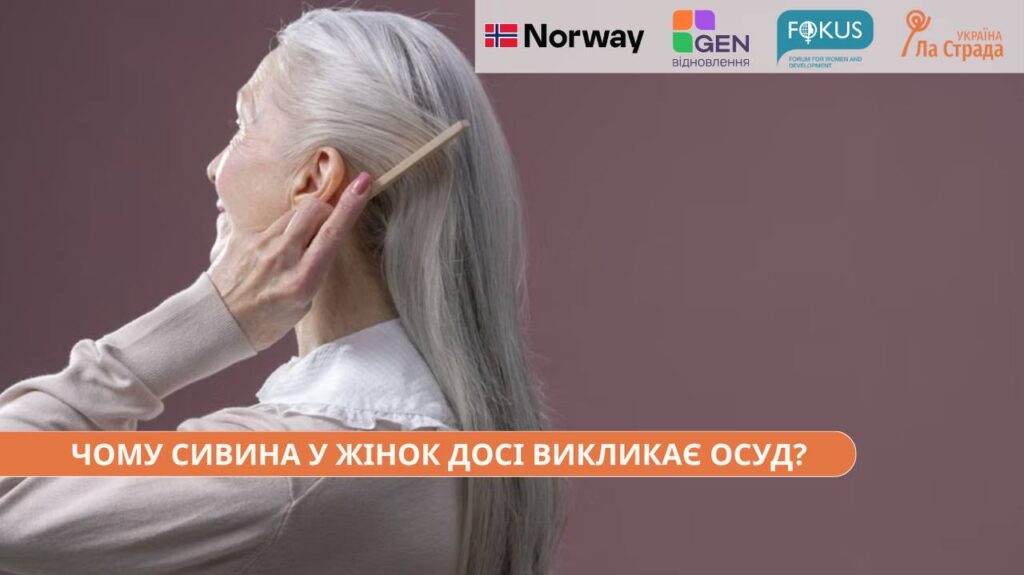
For many women, the first gray hairs are not just a natural change in appearance, but a cause for concern. Why does gray hair cause so much condemnation?
Women's gray hair is still often perceived as a sign that a woman has "stopped taking care of herself" or is afraid of age-related changes. Because of this, many women start dyeing their hair regularly not because they want to, but because they fear judgment or unwanted advice.
When natural changes in appearance become the subject of evaluation, a woman may begin to feel that her appearance must meet certain expectations in order to be accepted by society.
The right to choose
In recent years, the situation has gradually changed. More and more women are consciously leaving their natural gray hair and openly saying that it is a natural process, not a reason to be ashamed of themselves.
Meanwhile, other women continue to dye their hair because it's what they feel comfortable with. It's important to understand that a woman shouldn't have to make excuses for either dyeing her hair or leaving it natural. Both decisions are equally normal.
The problem is not gray hair.
The problem is that women's appearance is still considered a reason for evaluations, advice, and comments.
That's why the conversation shouldn't be about whether or not to dye your gray hair, but about every woman's right to decide for herself how she wants to look.
If you have been a victim of domestic violence or gender discrimination, please contact the National Hotline for Prevention of Domestic Violence, Human Trafficking and Gender Discrimination for advice and assistance:
📱116 123
☎ 0 800 500 335
This article was made possible by the support of the Norwegian people through the Ministry of Foreign Affairs of Norway (MFA of Norway) within the framework of the project “Building a Gender-Inclusive Recovery with the Women’s Movement of Ukraine” (GEN-Recovery). Responsibility for the content of the information lies with the NGO “La Strada-Ukraine”. The information presented in this article does not necessarily reflect the views of the Ministry of Foreign Affairs of Norway or the Government of Norway.
 Українська