
Gender segregation in the labor market: why a profession still depends on gender
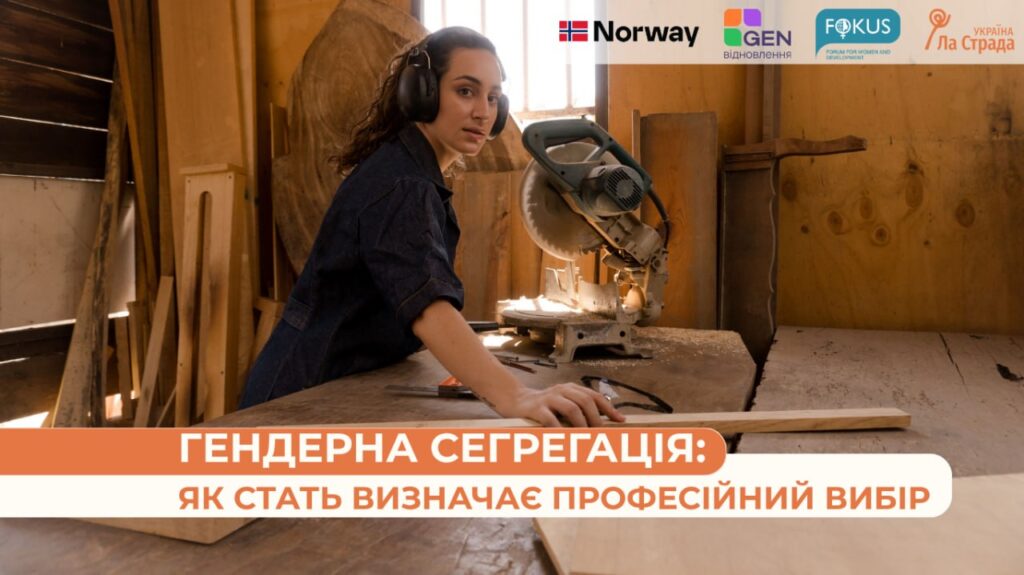
Society still perceives some professions as “feminine,” while others are “masculine.” As a result, job choices can depend not only on abilities, education, or personal interests, but also on stereotypical ideas about what a woman or man should “naturally” do.
What is gender segregation?
Gender segregation – is the uneven distribution of women and men between different professions, fields of activity and positions due to the influence of gender stereotypes and social norms.
Why are professions still divided into "women's" and "men's"?
This division is influenced primarily by gender stereotypes, the educational environment, societal expectations, and workplace culture.
Long before a child chooses a career, they receive signals about what is “appropriate” for their gender. Girls are more likely to be encouraged to pursue caring and the humanities, while boys are more likely to pursue technical subjects, leadership, and working with technology.
Over time, these perceptions can influence the actual choice of education and profession.
Added to this are the expectations of employers. For example, a woman may be perceived as a better candidate for a position that involves caring for others, while a man may be seen as a better candidate for management, physical work, or technical tasks.
The problem is that such decisions are based not on the professional qualities of a particular person, but on assumptions about what women and men are supposed to be like.
Why this isn't just a problem for women
Gender segregation limits the opportunities of both sexes.
If professions are divided into "female" and "male" ones, a person may refuse a job that is truly suitable for them due to fear of judgment or failure to meet expectations.
A man may not choose the profession of an educator or teacher because he fears that such work will be perceived as "unmanly."
A woman may not consider engineering, IT, construction, or technical professions because she hears from childhood that "it's not for girls."
As a result, the labor market loses part of human potential. A person ends up not where he could realize his abilities, but where his presence is considered socially acceptable.
How to reduce gender segregation
WITHThe father should not determine what professions a person can choose, how high they can rise in their career, and how much they will receive for their work.
Employers need to review hiring and career advancement practices: assess competencies and results, rather than assuming who is "better suited" for a particular job based on gender.
A labor market without “male” and “female” professions
When professional choices are determined by a person's abilities, education, experience, and interests, rather than stereotypes about who they "should" be, not only do employees benefit. The labor market also benefits, as it receives motivated people who are genuinely interested in their work.
If you have been a victim of domestic violence or gender discrimination, please contact the National Hotline for Prevention of Domestic Violence, Human Trafficking and Gender Discrimination for advice and assistance:
📱116 123
☎ 0 800 500 335
Telegram: https://t.me/NHL116123_bot
Instagram: https://www.instagram.com/lastradaukraine?igsh=anhubWR2YzZvZWxj
Facebook: https://www.facebook.com/share/1DDns7NTvT/?mibextid=wwXIfr
This article was made possible by the support of the Norwegian people through the Ministry of Foreign Affairs of Norway (MFA of Norway) within the framework of the project “Building a Gender-Inclusive Recovery with the Women’s Movement of Ukraine” (GEN-Recovery). Responsibility for the content of the information lies with the NGO “La Strada-Ukraine”. The information presented in this article does not necessarily reflect the views of the Ministry of Foreign Affairs of Norway or the Government of Norway.
 Українська