
Gender quotas: how European countries are overcoming gender inequality in company management
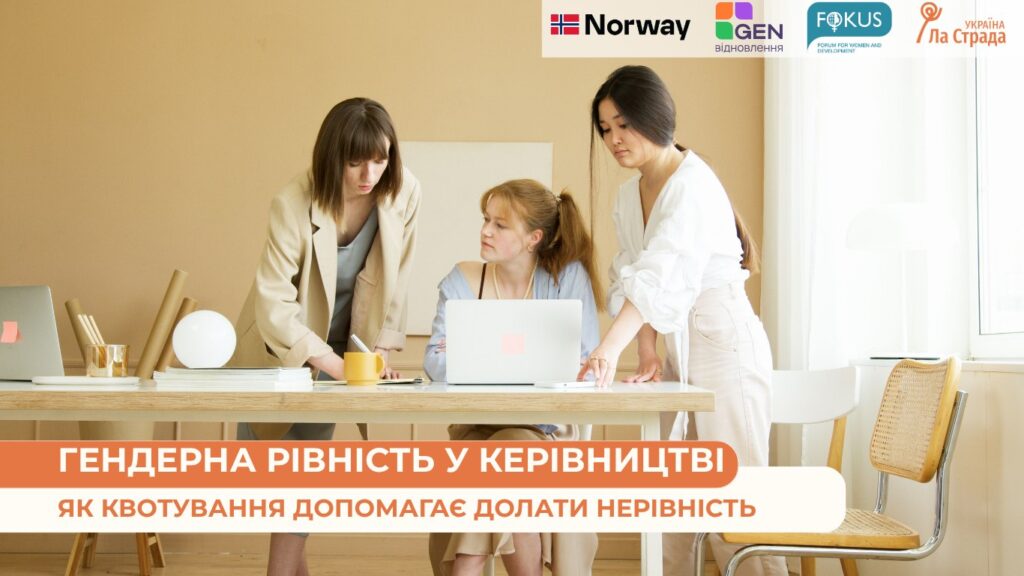
The gender imbalance in corporate leadership is not just a matter of representation. When women have fewer opportunities to advance to leadership positions, companies lose out on some of their professional potential, and society reshapes perceptions of who is “fit” to make important decisions.
One of the tools that European countries use to overcome this imbalance is gender quotas. Its essence is to establish a minimum representation of each gender in the composition of management bodies. Quotas can be applied at the legislative level or as internal company policies.
Gender quotas do not mean automatically appointing a person to a position solely because of their gender. Their task is to change the conditions under which selection takes place and prevent a situation where a certain group is systematically excluded from the decision-making process.
How do gender quotas work?
The state sets requirements for gender representation in management bodies, and companies must take them into account when forming boards of directors or supervisory boards.
The Directive on improving the gender balance among company directors provides for measures to increase the representation of women in the management bodies of large public companies.
However, quotas are not the only tool. They work more effectively when combined with other measures: transparent hiring procedures, equal access to professional development, mentoring programs, and opportunities to combine work and family responsibilities.
Hard and soft mechanicswash
European countries use different approaches.
Tough approach provides for mandatory requirements regarding gender representation. Failure to comply with them may result in sanctions or other consequences as provided by law.
Soft approach is based on recommendations, corporate policies, and the “comply or explain” principle. A company may not achieve the recommended indicator, but then it must explain the reasons and report on the steps it plans to take to change the situation.
Both approaches can be part of a broader gender equality policy. The choice of a specific mechanism depends on the specifics of the country's labor market and corporate environment.
Why aren't quotas enough?
A quota may change the composition of the governing body, but it does not necessarily change the environment in which women work.
If a company formally ensures gender representation, but at the same time maintains opaque promotion rules, unequal distribution of development opportunities, or a culture in which women constantly have to prove their competence, the problem remains.
Therefore, along with quotas, it is important to:
- use clear criteria for evaluating candidates;
- ensure equal access to training and professional development;
- create mentoring programs for future female leaders;
- combat discrimination and gender stereotypes in the workplace;
- create conditions that allow combining professional activities and family responsibilities;
- encourage equal sharing of care work between women and men.
So the question is not only that, How many women are at the negotiating table?, but also whether they have a real impact on decision-making.
Gender quotas as one of the tools that can help overcome the situation where established practices and stereotypes have been reproducing the advantage of one group in leadership for years.
At the same time, long-term change requires a comprehensive approach. If a woman has professional knowledge and experience, but faces additional barriers due to her gender, the problem lies not in her “lack of readiness” for leadership, but in the conditions in which professional advancement occurs.
Gender equality in leadership is not about giving someone an advantage. It's about ensuring that a person's gender does not determine the limits of their professional capabilities.
If you have been a victim of domestic violence or gender discrimination, please contact the National Hotline for Prevention of Domestic Violence, Human Trafficking and Gender Discrimination for advice and assistance:
📱116 123
☎ 0 800 500 335
This article was made possible by the support of the Norwegian people through the Ministry of Foreign Affairs of Norway (MFA of Norway) within the framework of the project “Building a Gender-Inclusive Recovery with the Women’s Movement of Ukraine” (GEN-Recovery). Responsibility for the content of the information lies with the NGO “La Strada-Ukraine”. The information presented in this article does not necessarily reflect the views of the Ministry of Foreign Affairs of Norway or the Government of Norway.
 Українська