
Motherhood and Work: When Motherhood Becomes a Financial Vulnerability
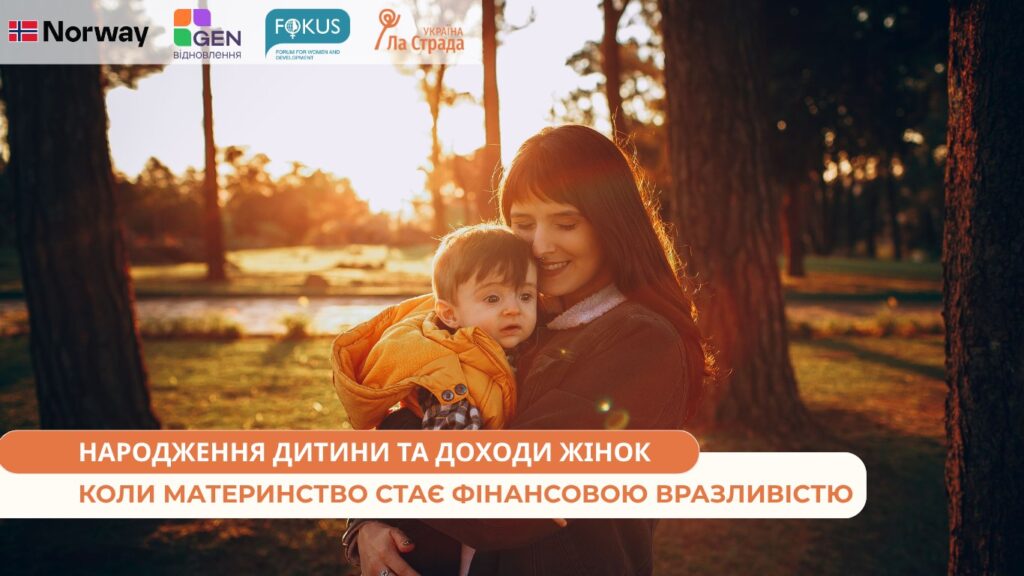
Having a child can significantly change a woman's professional life. After having a child, many mothers take a break from work, return to it later, or choose a job that is easier to combine with caregiving.
This affects not only the number of working hours, but also income, career growth, and further professional opportunities.
"The penalty for motherhood"
The economic consequences of this situation are called "a fine for motherhood".
This refers to a situation where, after having a child, a woman faces lower incomes, slower career growth, or fewer professional opportunities compared to women without children or men.
This can happen for various reasons.
A woman can temporarily leave her job. Upon returning, she can switch to part-time work. She can refuse business trips, overtime work, or positions with greater responsibility due to the need to care for the child.
In such a situation, a woman may be financially dependent on her partner.
Importantly, how the partner deals with money and access to resources.
Having a child does not mean that a woman loses the right to her own money, professional development, or participation in financial decision-making.
If finances are used to control, restrict freedom, or coerce, this can be a manifestation of economic violence.
Economic violence can occur when:
- all money in the family is controlled
- demanding reporting for every hryvnia spent;
- prohibition to work or creation of obstacles to employment;
- taking money earned;
- deliberate deprivation of funds for basic needs;
- using financial dependency as a way to force someone to stay in a relationship;
Why the situation is often different for men
The birth of a child does not necessarily mean a career break for a man.
On the contrary, men are expected to continue working and providing for the family after the birth of a child.
Therefore, they do not interrupt their professional path, continue to accumulate experience and apply for promotion.
For men, fatherhood can have a positive impact on their perception of themselves as employees: more responsible, stable, or motivated.
For women, this is often perceived differently: an employer may expect that after the birth of a child, she will be less available for work or will take more vacations or remote days due to family responsibilities.
The biggest challenge is combining work and caregiving.
The problem is not that the woman doesn't want to work.
She may want to pursue a career, but at the same time not have enough opportunities to combine work with childcare.
If there is no one to leave the child with, daycare is unavailable or its schedule does not match the work schedule, and the employer does not offer flexible conditions, the choices can be very limited.
Then the woman is forced to choose between work and care - or to seek compromise employment with lower pay.
How to make opportunities more equal
To ensure that the birth of a child does not mean the loss of professional prospects, it is important to create conditions in which parents can combine work and family life.
This includes affordable childcare, flexible work formats, the possibility of a gradual return after a break, and protection from discrimination.
The birth of a child should not mean that a woman loses the opportunity to develop, earn, and build a career.
If you have been a victim of domestic violence or gender discrimination, please contact the National Hotline for Prevention of Domestic Violence, Human Trafficking and Gender Discrimination for advice and assistance:
📱116 123
☎ 0 800 500 335
This article was made possible by the support of the Norwegian people through the Ministry of Foreign Affairs of Norway (MFA of Norway) within the framework of the project “Building a Gender-Inclusive Recovery with the Women’s Movement of Ukraine” (GEN-Recovery). Responsibility for the content of the information lies with the NGO “La Strada-Ukraine”. The information presented in this article does not necessarily reflect the views of the Ministry of Foreign Affairs of Norway or the Government of Norway.
 Українська