
GREVIO's first report on Ukraine: achievements, gaps and next steps
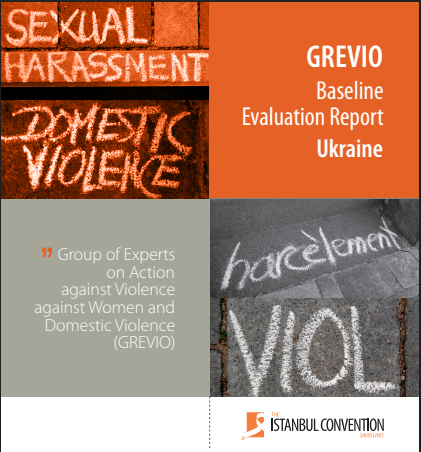
On 4 September 2026, GREVIO, the Council of Europe’s independent expert group on combating violence against women and domestic violence, published its first baseline report on Ukraine’s implementation of the Istanbul Convention. The experts noted the political will and changes that Ukraine had achieved despite full-scale Russian aggression. At the same time, they drew attention to the fact that the legal guarantees of protection were not always ensured in practice.
GREVIO report identifies what needs to change to ensure that help is accessible, responses to violence are consistent, and perpetrators are held accountable for their actions. The result for the victim is the ability to seek help, stop the violence, and hold the perpetrator accountable without being re-traumatized when interacting with government authorities.
GREVIO assessed the implementation of the Convention taking into account the war in Ukraine. The conclusions are based on state reporting, information from civil society organizations and meetings during a monitoring visit to Kyiv on 14–16 May 2025, and the report itself was adopted on 2 July 2026. The experts took into account the destruction of infrastructure, population displacement, the burden on specialists and budgetary constraints. They separately noted the limitations of Ukraine's implementation of obligations in the temporarily occupied territories.
The Istanbul Convention explicitly provides for its application in times of war. Therefore, the assessment covers conflict-related sexual violence, domestic violence and other forms of violence against women. Protection from all these forms of violence must be part of the humanitarian response and reconstruction of Ukraine.
GREVIO notes a number of Ukraine's achievements. Thus, changes in legislation are positively assessed: in particular, the adoption of legislation on preventing and combating domestic violence, the definition of rape due to the lack of voluntary consent, and the introduction of administrative liability for sexual harassment in 2024. The experts also noted changes aimed at preventing the release of perpetrators from administrative liability due to the insignificance of domestic violence, and the prohibition of reconciliation during divorce in cases of domestic and gender-based violence.
Another achievement is the development of support services. According to the report, as of May 2025, 59 shelters and 108 crisis rooms were operating in Ukraine, and about 700 mobile teams provided socio-psychological support. GREVIO notes the state's cooperation with women's human rights organizations and the established redirection between hotlines. The report mentions the work of the National Hotline of the NGO "La Strada-Ukraine" and the training that its specialists conduct for workers of other lines.
The specialization of the police and prosecutors, the training of professionals on conflict-related sexual violence, and the increased attention to the rights and needs of victims were also positively assessed. In education, GREVIO noted the review of textbooks for discriminatory content and gender stereotypes. These changes create conditions for addressing the causes of violence and its early detection.
At the same time, GREVIO identifies problems that require further changes in legislation, the practice of its application, and the organization of assistance and support.
One of the important findings of the report concerns how voluntary consent is assessed in practice. GREVIO welcomes its inclusion in the definitions of rape and sexual assault in the Criminal Code. However, courts sometimes still attach decisive importance to the use of force or threats, as well as the resistance of the victim. Furthermore, the wording of Article 153 of the Criminal Code, according to experts, creates the risk of interpreting the use of force as a mandatory element of this crime. GREVIO therefore calls for the definition to be brought into full compliance with the Convention. In order to assess voluntary consent, it is necessary to establish whether the person could freely consent to the sexual act in the circumstances in which they found themselves. This is why the surrounding circumstances are so important. The absence of physical resistance does not in itself indicate consent on the part of the victim. If the assessment of evidence is based on an idea of how the victim “should have behaved”, this may distort the conclusions in the case and hinder the victim’s access to justice.
GREVIO also calls for the elimination of excessive dependence of the investigation of crimes defined by the Convention on the statement of the victim. She may be under pressure from the offender or relatives or fear retaliation. Therefore, the state should ensure the possibility of initiating proceedings without shifting the entire initiative to the victim, and in the cases provided for by the Convention - to continue the investigation after she withdraws the statement. Experts also draw attention to the excessive softness of sanctions for violence. They should be effective, proportionate and deter further violence. A separate recommendation concerns the criminalization of stalking - repeated harassment that causes fear for one's own safety, in particular with the use of digital technologies.
Stereotypes, stigma and barriers in sexual violence cases are analyzed in joint alternative report of civil society organizations, prepared with the participation of La Strada-Ukraine. GREVIO relies on this submission in its analysis. GREVIO Report, paragraphs 180–190, 206, 233–234, 252–254.
What prevents access to help?
Despite the development of the network of services, access to assistance remains uneven. GREVIO attributes this to the distribution of services across territories, unstable funding, lack of trained professionals and obstacles for internally displaced persons. Objective constraints make it particularly difficult to access and use services in rural areas and near the front. Women with disabilities, older women and other groups facing multiple discrimination may face additional barriers to accessing assistance and support.
According to GREVIO, there are currently no crisis centres for rape victims or centres for assistance to victims of sexual violence, as provided for in Article 25 of the Convention, in Ukraine. The basis for their creation could be the existing services and experience in assisting victims of conflict-related sexual violence. Such centres should provide emergency medical care, collection of forensic evidence taking into account the needs of the victim, and short-term and long-term psychological support. Access to this assistance should not be dependent on the willingness to file a complaint with the police. In order for such services to be provided on a continuous basis, predictable funding is needed, including support for the NGOs that provide them. GREVIO Report, pp. 32–37, 129–144.
In terms of preventing re-offending and protecting children, GREVIO welcomes the introduction of risk assessments, urgent prohibitory and restrictive orders. However, their application in practice needs to change. One-off risk assessments and insufficient exchange of information between institutions mean that subsequent decisions may be based on outdated information. Experts also describe cases where the order prohibits contact but the perpetrator continues to live with the victim. Such a measure puts her safety at risk.
Therefore, the risk assessment needs to be repeated, and the police, social services, prosecutors and support organizations need to act according to a common plan. During a full-scale war in Ukraine, the perpetrator’s access to weapons is of particular importance. The result of special measures should be evaluated by whether the instructions are followed and whether threats and violence have stopped.
A separate issue identified is that the presence of children during domestic violence is not always recorded. As a result, children may be left without help and support, and responders may be left without the information necessary to make decisions about their safety. GREVIO stresses that the history of violence should be taken into account when determining the child's place of residence and the procedure for communicating with parents. Safe meetings require appropriate conditions and supervision by trained professionals.
Experts also warn against putting pressure on victims to reconcile. A procedure that is formally voluntary can become de facto compulsory if a person fears the consequences of refusing or is under pressure. GREVIO welcomes the ban on reconciliation in divorce cases where there has been a history of domestic violence. To make this ban work, experts strongly recommend that the Ukrainian authorities introduce mechanisms whereby judges and mediators systematically check whether there has been a history of violence. GREVIO Report, paragraphs 166–172, 210–216, 235–251.
Preventing violence and overcoming stigma during recovery.
War increases the burden on families and support services. GREVIO draws attention to the fact that victims may have difficulties reporting violence if the perpetrator is a military member. At the same time, experts emphasize the need to expand support for people who have experienced traumatic war. For Ukraine, these tasks are linked: to provide such support, to protect victims and to hold accountable those responsible for violence.
Stigma also prevents victims from seeking help, particularly for victims of conflict-related sexual violence. Therefore, education efforts should help to recognize violence and explain that the perpetrator is responsible for it. This work should also involve men and boys.
In education, GREVIO draws attention to the dependence of teaching these topics on the initiative of individual teachers. Teaching equality, mutual respect, bodily integrity and voluntary consent requires a systematic approach. It should be age-appropriate and accompanied by teacher training. GREVIO Report, paragraphs 63–81, 94–100.
What solutions does Ukraine need first and foremost?
GREVIO's findings suggest three related priorities for Ukraine. First, it is necessary to harmonize legislation with the Convention and ensure a common understanding of violence, voluntary consent and the application of special measures in practice. Along with this, it is necessary to guarantee the financing of assistance and its accessibility in different territories. The coordinated work of institutions should ensure protection from the first appeal to the completion of proceedings and further support for victims.
IN official comments on the report The Ukrainian authorities provide additional information on the measures taken and planned changes. Among them is Bill No. 12297 on ensuring the full implementation of international law provisions on combating domestic and other forms of violence, including against children, into Ukrainian legislation. The adoption of this bill is an important step that Ukraine must take.
The next stage of international monitoring will be the consideration of the conclusions By the Committee of the Parties to the Istanbul Convention. On the basis of GREVIO reports, it adopts recommendations for priority action and calls for the implementation of all conclusions of the expert group. Under the baseline evaluation procedure, parties report after a three-year period of implementation of the recommendations. The deadline for Ukraine will be determined by the relevant decision of the Committee. In Ukraine, the report must be submitted to the Verkhovna Rada. This is provided for in Article 70 of the Convention, which also invites national parliaments to participate in monitoring its implementation. GREVIO requests that the report be translated into Ukrainian and widely disseminated among authorities at all levels, the judiciary and civil society.
The Committee of the Parties will subsequently assess information on the implementation of its recommendations. Civil society organisations may provide independent information on the results and remaining issues. GREVIO's further monitoring will include thematic rounds. As of 7 September 2026 on the official page of Ukraine A separate schedule for such an assessment for our country has not yet been published.
The report identifies what changes are needed in Ukrainian law and practice to bring them into line with international standards for protection from violence. These findings should form the basis for Ukraine’s consistent decisions and implementation.
 Українська