
"You should have gotten back in shape by now": How societal pressure on women after giving birth affects mental health
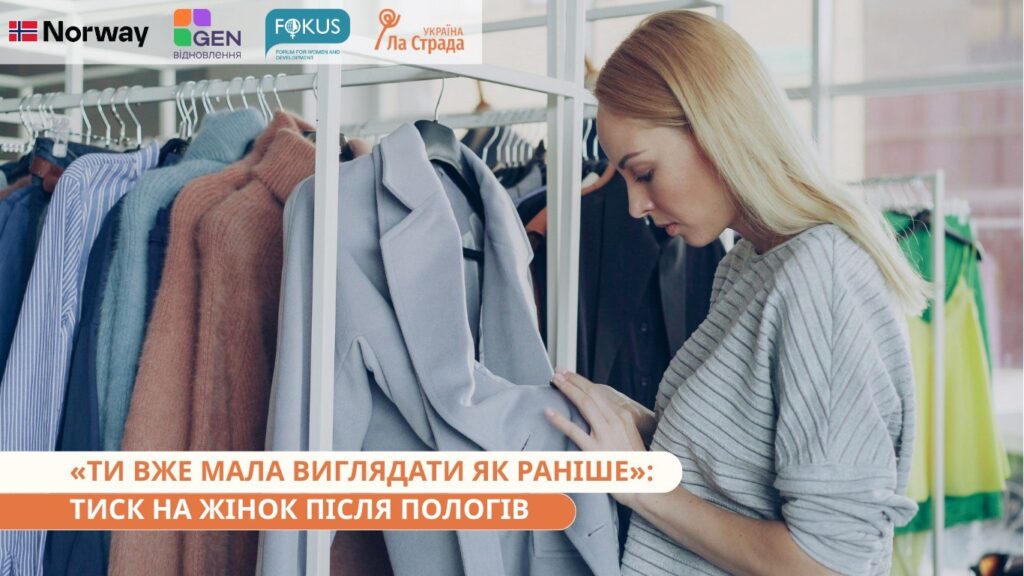
"I launched myself", "I need to lose weight urgently", "Something is wrong with me".
After giving birth, your body may change.
After giving birth, the body gradually recovers, but this process does not happen the same for everyone. It is influenced by: the presence of postpartum complications, breastfeeding, sleep, nutrition, the level of physical and emotional stress, and the amount of support. After giving birth, your body may change. Your weight, skin condition, or hair may change. Some of these changes are a natural part of the transition to a new physiological state.
Changes don't just happen to the body
Along with the new role, everyday life, responsibilities, and self-perception change. Before having a child, a woman had her own rhythm of life, goals, and habits. After giving birth, all of this changes, and the psyche needs time to adapt. Against this background, the demand to "get back in shape quickly" can create additional stress.
When change doesn't mean caring, but putting pressure on yourself
Movement, sports, changing your diet, or returning to your usual activities can be part of recovery if the woman herself wants it.
But there is a difference between:
"I want to do sports because I miss it"
and
"I have to work out because I'm ashamed of my body."
In the first case, it is about need and desire. In the second, it is about pressure.
When exercise and diet changes become just another way to “fix” your body, a woman may constantly judge herself by how close she is to achieving her desired results. And even real changes can feel like they’re not enough.
After giving birth, a woman may compare her body to what it was like before pregnancy.
At first, someone might say, “You’ve improved a bit.” Then the woman herself begins to look at herself in the mirror and look for something that “needs to be fixed.” Over time, every change in weight or body shape is perceived as a personal failure.
After giving birth, a woman may compare her body to what it was before pregnancy. Social media adds to this. In the feed, it is easy to see stories of “perfect recovery”, workouts a few weeks after giving birth, “before and after” photos, and stories of women demonstrating rapid changes.
However, someone else's result does not show the whole context: health status, financial capabilities, amount of sleep, body characteristics, or how much time it took.
The postpartum period needs support, not judgment
Society should respect the process a woman goes through after giving birth, rather than impose additional roles and expectations on her.
This also applies to loved ones. Instead of evaluating appearance, offer to take on some of the household chores, cook food, take the child for a walk, let the woman sleep, or just listen to her.
Postpartum recovery requires not only medical attention, but also support from those around her. It is important for a woman to be able to rest, eat, be in a safe space, and seek help when she needs it.
“I want to get back in shape” - is that really my desire?
If you find yourself thinking that "I urgently need to get back in shape," you can try asking yourself a few questions:
Who said my body isn't like this now?
Do I really want to change it or am I afraid of the judgment of others?
What do I feel about my body right now – worry, anger, shame, disappointment?
What am I really missing – exercise, rest, sleep, time for myself or support?
These questions are not about convincing yourself that you have to like your body every day.
It's about something else: separating your own needs from the expectations imposed by your environment.
You may want to change your body, but this decision should be yours alone, not a condition for conforming to society's perception of the beauty standards of the female body.
A woman after giving birth needs time, safety, psychological support, and people around her who will not judge her body but will support her.
If you have been a victim of domestic violence or gender discrimination, please contact the National Hotline for Prevention of Domestic Violence, Human Trafficking and Gender Discrimination for advice and assistance:
📱116 123
☎ 0 800 500 335
This article was made possible by the support of the Norwegian people through the Ministry of Foreign Affairs of Norway (MFA of Norway) within the framework of the project “Building a Gender-Inclusive Recovery with the Women’s Movement of Ukraine” (GEN-Recovery). Responsibility for the content of the information lies with the NGO “La Strada-Ukraine”. The information presented in this article does not necessarily reflect the views of the Ministry of Foreign Affairs of Norway or the Government of Norway.
 Українська