
Women in sports: the path from prohibitions to recognition
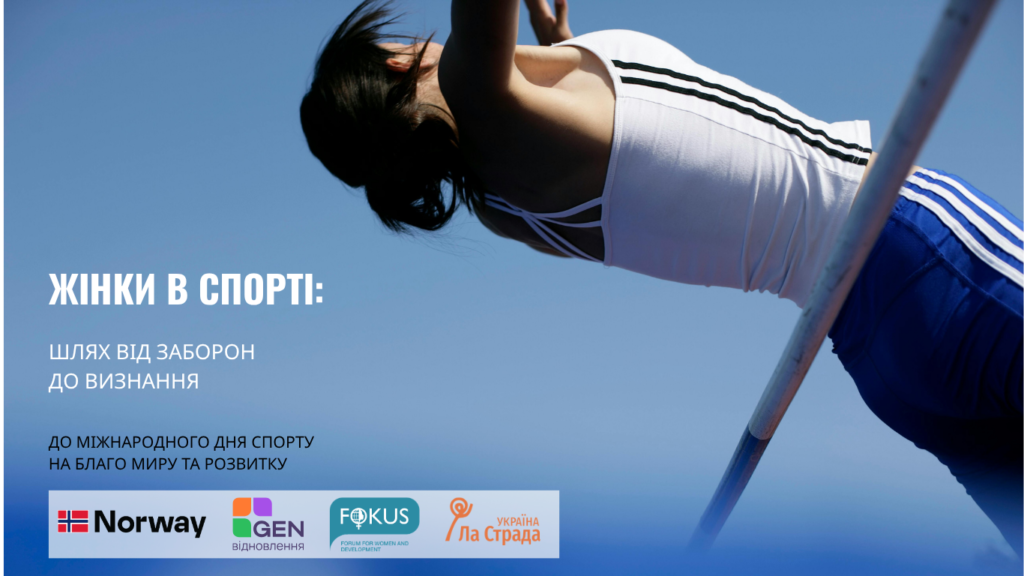
Today, sports seem like a place of equal opportunity – women compete internationally, set records, become champions, and inspire millions. But it wasn’t always like that.
A little over a hundred years ago, women were effectively banned from playing sports. It was believed that physical activity was “harmful to women’s health” and that participating in competitions was incompatible with “feminine nature.” Sports were a space where women were either absent or perceived as an exception.
And it is thanks to these exceptional women that sport looks different today.
Exclusion of women from competitions
At the first modern Olympic Games in 1896, women did not participate at all. The founder of the modern Olympic movement, Pierre de Coubertin, openly opposed women's participation in the competition, believing that their participation would be "impractical, uninteresting, unaesthetic and simply wrong."
Even when women were gradually allowed to compete, it was only in “acceptable” sports – tennis, gymnastics or figure skating. Many disciplines remained closed for decades.
Pioneers who changed the rules of the game
Despite prohibitions and prejudices, women emerged who broke the system. They were the ones who paved the way for others.
As early as 1900, when women were first allowed to compete in the Olympic Games, Swiss yachtsman Hélène de Pourtale and British tennis player Charlotte Cooper became the first female Olympic champions. Their victories symbolized that women could and should be part of great sport.
Another important figure is Katherine Switzer, who in 1967 was the first to officially run the Boston Marathon, despite the ban on women. During the race, organizers tried to force her off the course, but she finished, paving the way for women in marathons.
It is also worth mentioning Billie Jean King, a tennis player who not only won tournaments but also fought for equal pay in sports. Her work was an important step towards the recognition of women in professional sports.
These women didn't just compete, they overcame opposition, criticism, discrimination, and often outright hostility. They were few in number, and that's why they stood out so much.
Obstacles along the way
Pioneers in sports faced numerous barriers:
- social stereotypes that questioned their "femininity",
- restrictions on access to competitions and training,
- lack of funding and support,
- unequal conditions and rewards,
- pressure from society and the media.
They were forced to prove not only their skill, but also their very right to be in the sport.
Today, women are an integral part of sports.
The situation has changed dramatically. Women participate in almost all sports, are represented at international competitions, and are a full part of the sports community.
The number of female athletes, coaches, referees, and managers in sports is growing. Women's sports are becoming more visible, and the achievements of female athletes are more recognized.
And despite the fact that gender stereotypes regarding "women's" and "men's" sports still exist, progress is evident. And it was made possible thanks to those who once risked taking the first step.
Sport as a space for change
Sport is not just about physical strength or performance. It is about the opportunity to be visible, to assert yourself, to change the rules of the game. The history of women in sport shows how barriers that seemed unbreakable yesterday are gradually being broken down.
The path of women in sports is a story of struggle, endurance and change. From complete prohibition to recognition and success. And although today we see significant results, in many other areas this struggle is still ongoing. But the example of sports shows: change is possible.
Every step, every victory, every vote matters. Because where there were once prohibitions, today there are opportunities. And this is the best proof that the movement forward is irreversible.
This article was made possible by the support of the Norwegian people through the Ministry of Foreign Affairs of Norway (MFA of Norway) within the framework of the project “Building a Gender-Inclusive Recovery with the Women’s Movement of Ukraine” (GEN-Recovery). Responsibility for the content of the information lies with the NGO “La Strada-Ukraine”. The information presented in this article does not necessarily reflect the views of the Ministry of Foreign Affairs of Norway or the Government of Norway.
 Українська