
Women's emancipation in 2026: why an issue that was considered resolved remains open today at the international level
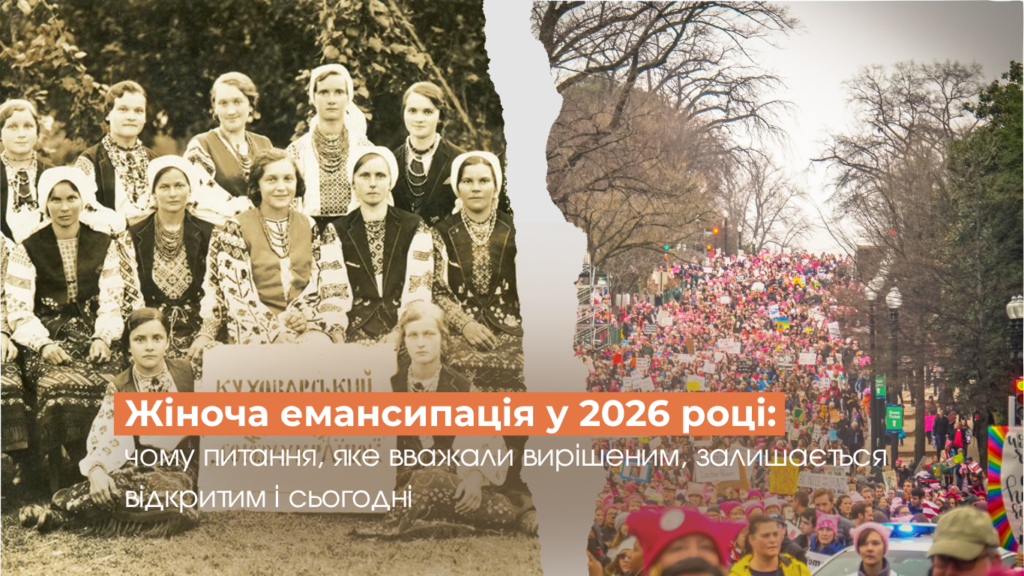
In 1893, New Zealand became the first country in the world to grant women the right to vote. Switzerland did so in 1971. Saudi Arabia only granted women the right to vote in 2011. announced that women would be allowed to participate in elections starting in 2015.
This chronology easily fits into one human lifetime.
And yet today, in 2026, it is generally accepted that the issue is closed because women have already achieved everything, so talking about emancipation means looking for a problem where there is none.
But while these conversations are ongoing, girls in Afghanistan are losing even the right to remain silent, because from now on their silence is legally considered consent to marriage, report The Times, The Washington Post.
How did it all start?
The first waves of women's emancipation in Europe and America in the 19th century began with the fact that women could not inherit property, study at universities, sign contracts without their husband's permission, or vote.
In Great Britain, women who demanded the right to vote were imprisoned. In the US, suffragettes marched for years with placards in front of the White House and were arrested.
In Ukraine, equality existed back in Soviet times, but only on paper. It was “equality” under which a woman had to simultaneously “be a mother,” “look good,” “not outshine her husband,” and “not complain.”
Silence as consent: How international law responds to the systematic violation of women's rights
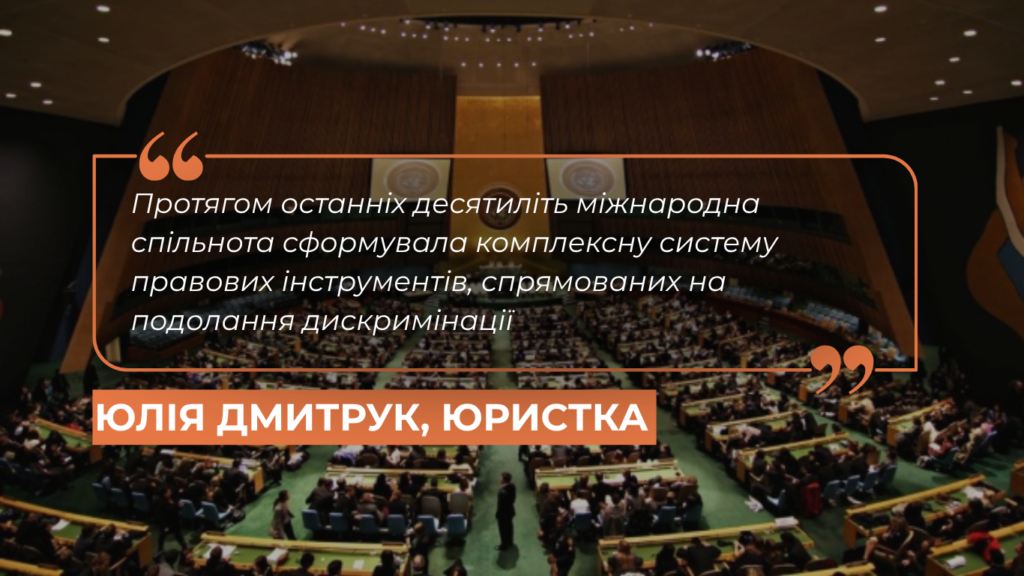
“Ensuring women’s rights is one of the key areas of international law in the field of human rights protection. Over the past decades, the international community has formed a comprehensive system of legal instruments aimed at overcoming discrimination, preventing gender-based violence, ensuring equal opportunities for women and protecting victims from violations of their rights,” – comments Yulia Dmytruk, a lawyer at the NGO “La Strada-Ukraine”.
Julia emphasizes, that in the event of violations of women's rights that become systemic, and state protection mechanisms prove insufficiently effective in preventing, stopping, and adequately responding to them, international law offers not only mechanisms for recording violations, but also tools for influencing states and protecting victims.
The Afghan Taliban recently enacted a new official document, the “Principles of Divorce,” which stipulates that the right to marry is now tied exclusively to puberty. In addition, the code stipulates that the silence of a virgin girl during a courtship will be interpreted as her consent to marriage, – writes Washington Post.
Women and girls already face widespread discrimination in Afghanistan, where there are laws dictating how they should dress and behave. They forbidden to attend high schools and universities , as well as most jobs, almost all types of leisure activities, including gyms, beauty salons, and even public parks.
“Decree No. 18 is part of a broader and deeply disturbing trajectory of violations of the rights of Afghan women and girls”, – said Georgette Gagnon, Deputy Special Representative of the UN Secretary-General and Head of UNAMA.
Ukrainian context: new Civil Code
It would seem that Ukraine is confidently moving in the European direction, having ratified the Istanbul Convention. However, the Ukrainian human rights community has sounded the alarm due to the registration and adoption in the first reading of draft law No. 14394 — new edition of the Civil Code of Ukraine. Human rights activists emphasize that the document contains norms that can significantly narrow the scope of human rights and weaken the position of women.
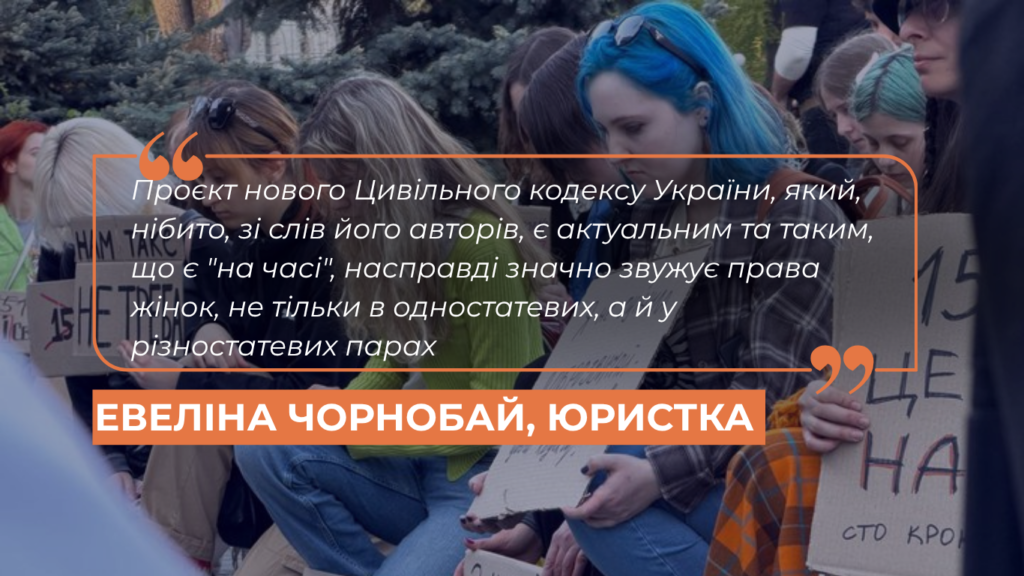
“The draft of the new Civil Code of Ukraine, which, according to its authors, is supposedly relevant and “up to date,” in fact significantly restricts women’s rights, not only in same-sex, but also in heterosexual couples.” – says the lawyer of the NGO “La Strada-Ukraine”.
Evelina Chornobay emphasizes, that although the norm according to which marriage is built on voluntary principles is preserved in the new draft, the authors did everything to make the divorce process as difficult as possible, not only for women, but also for men.
She highlighted the norms that are important to pay attention to:
– through the prism of the criterion of “common decency” will allow assessing a woman’s behavior as “immoral” in certain cases;
– will limit the possibility of receiving alimony, both by women and men;
– will be obliged to compensate for the “damage” suffered by one of the parties in the event of the termination of the engagement;
– completely and completely remove even the hypothetical possibility of recognition for same-sex partnerships from the legal realm.
“Perhaps updating the legislation is indeed “timely”, however, radical and rapid changes to a document that regulates almost all public legal relations in the state and changes that will affect almost everyone, regardless of gender, in particular due to serious challenges to the stability of justice and judicial practice, which has been developed over decades, without active public discussion and detailed analysis of each individual proposed norm, will cause a legal collapse” – says Evelina Chornobai.
Women's emancipation is not a protest
Women's emancipation is often presented as something aggressive. However, first and foremost, it is about defending full and equal rights.
Every crisis — military, economic, demographic — provides every opportunity to “postpone” women’s rights “for later.” For later, when the war is over. For later, when the economy stabilizes. For later, when “more important” problems are resolved.
But for some reason, the "later" for such questions never comes.
To be free today means having the right to say “no” without fear of consequences. Having the right to help without shame. Having the right to make your own decisions—even if they don’t coincide with what is expected of you.
If you victims of domestic violence or gender discrimination, contact the National Hotline for the Prevention of Domestic Violence, Human Trafficking and Gender Discrimination for advice and assistance:
by phone 116 123 or 0 800 500 335
The project is implemented by UNFPA, the United Nations Population Fund in Ukraine, with the support of Sweden and Norway in cooperation with the NGO “La Strada-Ukraine”.
#LaStrada #LaStradaUkraine #LaStrada #LaStradaUkraine #UNFPA #UNFPAUkraine
 Українська